
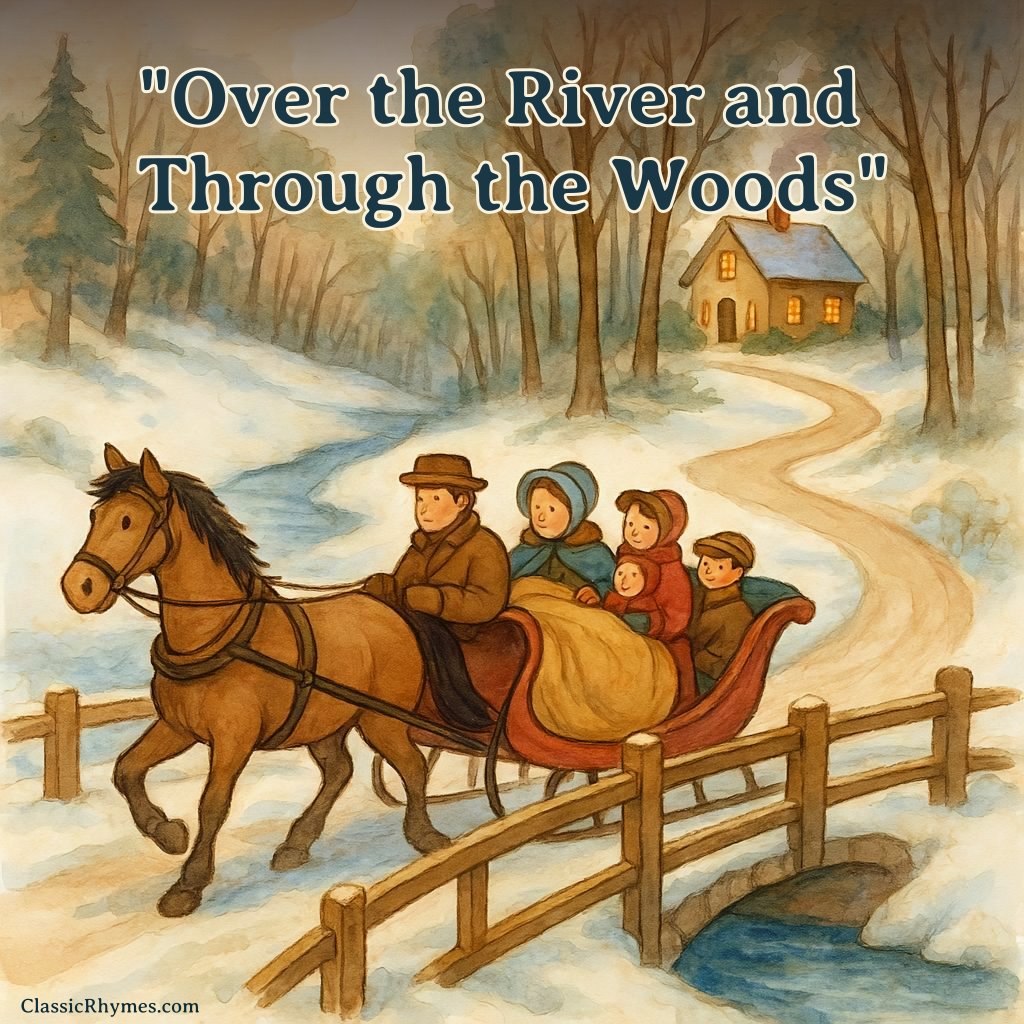
Over the River and Through the Woods
This classic American verse, originally titled “The Boy’s Thanksgiving Day”, was written by Lydia Maria Child and first published in 1844. It depicts a festive sleigh ride to visit grandparents for a holiday dinner, specifically Thanksgiving in the original text, though it is now widely associated with Christmas as well.
Over the river and through the woods,
To Grandmother’s house we go.
The horse knows the way to carry the sleigh
Through the white and drifted snow, O!
…
Over the river and through the woods,
Oh, how the wind does blow.
It stings the toes and bites the nose,
As over the ground we go.
Print or Save This Rhyme
Download PDFRecitals
Listen as female American:
Listen as male American:
Optional Additional Verses:
Over the river and through the woods,
Trot fast my dapple gray.
Spring over the ground like a hunting hound
On this Thanksgiving Day, Hey!
Over the river and through the woods,
Now Grandmother’s face I spy.
Hurrah for the fun, is the pudding done?
Hurrah for the pumpkin pie!
What is the Meaning of the ‘Over the River and Through the Woods’ Nursery Rhyme?
This classic poem and song celebrates a joyful journey through wintry weather to a family gathering at Grandfather’s house, originally for Thanksgiving. The vivid descriptions of snow, cold wind, and horses pulling a sleigh capture the excitement and warmth of holiday traditions, emphasizing family, festivity, and the anticipation of reunion.
History and Origin of the Rhyme
Written by Lydia Maria Child in 1844 as “The New-England Boy’s Song about Thanksgiving Day”, it was included in her children’s poetry collection Flowers for Children. The poem is based on Child’s memories visiting her grandfather’s home in Medford, Massachusetts.
Time Period
Composed in the mid-19th century during a period when Thanksgiving was regionally celebrated in New England and before it became a national holiday in the United States.
Historical or Cultural Notes
Celebrating early New England Thanksgiving customs, the poem reflects 19th-century rural life and winter celebrations. The house referenced is believed to be Child’s grandfather’s home near the Mystic River in Massachusetts. This poem is often paired with other holiday songs such as “Jingle Bells” which also originated in the same region during this time.
Why It Became Popular
The poem’s bright imagery, relatable family theme, and rhythmic structure quickly made it a favorite for reading and singing during Thanksgiving and Christmas. Over time, it shifted in popular use from Thanksgiving to Christmas, with slight lyrical adaptations—such as changing “Grandfather’s house” to “Grandmother’s house” and substituting “wood” with “woods.”
Notable Variants
Later versions often substitute “Grandmother’s house” for “Grandfather’s house” and adapt the holiday to Christmas for wider seasonal appeal.
Structure, Style, and Themes
Structure and Style
- Meter: Iambic tetrameter, flowing and lyrical
- Rhyme Scheme: ABCB
- Line Count: Four-line stanzas (quatrains)
- Style Notes: Narrative, celebratory, descriptive
Themes
- Family and reunion
- Winter and weather
- Tradition and festivity
- Childhood joy and anticipation
Language Notes
The poem uses New England dialect and specific imagery such as “horse knows the way” and “ting-a-ling-ling” bells to evoke nostalgia and sensory details. The shift from “wood” to “woods” in modern versions reflects evolving American English usage.
Moral or Lesson
While primarily celebratory, the rhyme emphasizes the importance of family togetherness, the joy in traditions, and appreciating the journey as much as the destination.