
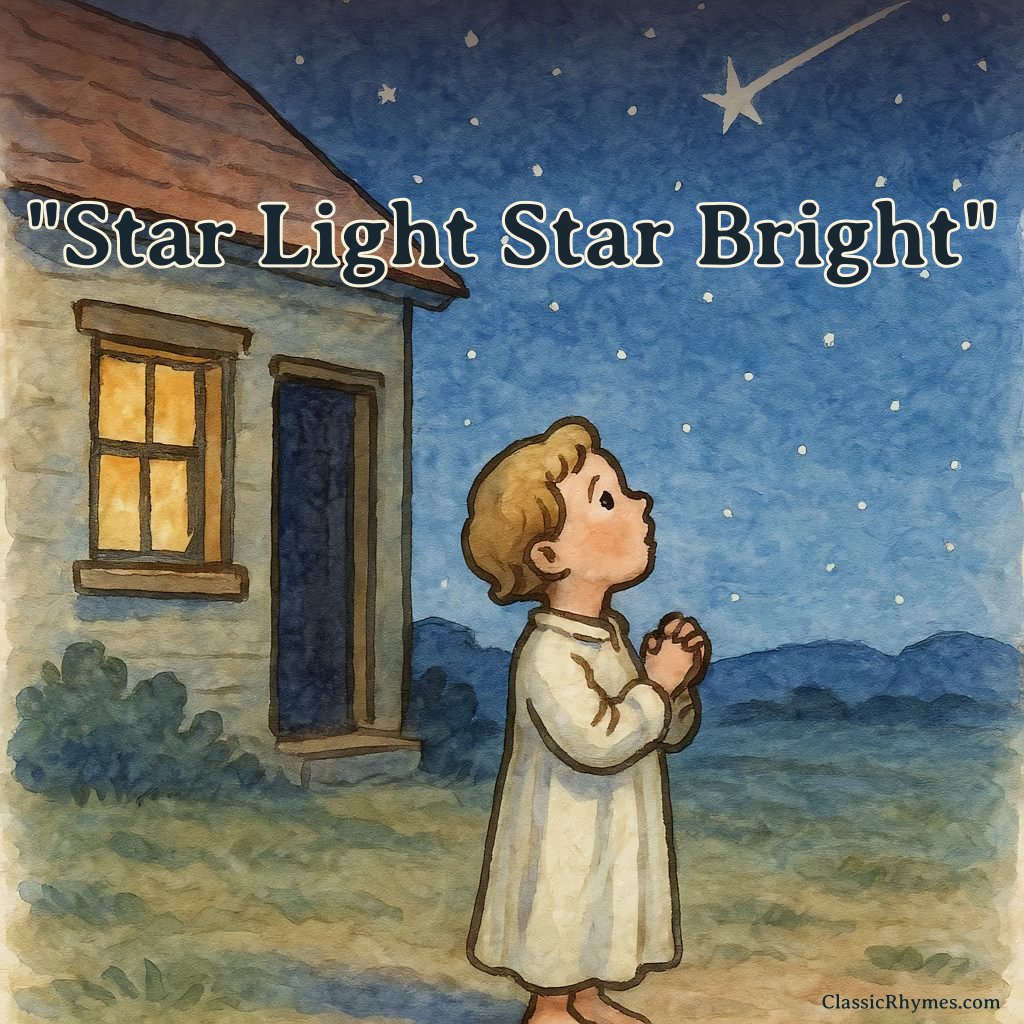
Star Light Star Bright
Star light, star bright,
First star I see tonight;
I wish I may, I wish I might,
Have the wish I wish tonight.
Listen as female British:
Listen as male American:
Listen as told in a story:
Meaning
This well-loved rhyme is recited when the first star appears at night, as children (and adults) make a wish in hopes it will come true. The verse plays on hopeful superstition and the magical feeling that the night sky can grant dreams. Its gentle words encourage imagination, hope, and a sense of wonder at the cosmos.
Origin
“Star Light, Star Bright” is of American origin, first recorded in the late 19th century, but rooted in much older traditions of wishing upon celestial bodies. The custom ties to folklore about making wishes on the first star and has since become a staple in English-speaking bedtime rituals.
Time Period
First confirmed in print in mid-to-late 1800s America; superstition itself dates back to antiquity. It spread internationally by the early 20th century.
Why It Became Popular
Its brief, memorable lines and universal theme—hopeful wishing—make it ideal for bedtime and comforting routines. The rhyme’s tradition links generations, making it a classic for parents, teachers, and children.
Structure and Style
- Meter: Gentle, lyrical meter for easy recitation
- Rhyme Scheme: AABB
- Line Count: Four lines
- Style Notes: Lullaby, superstitious, poetic
Themes
- Wishing and dreams
- Magic in the night sky
- Hope and wonder
- Bedtime ritual
Language Notes
Simple, repetitive diction helps young children learn and recite the rhyme. The double use of “wish” reinforces the intent and tradition.
Moral or Lesson
Encourages hopefulness, belief in possibilities, and appreciating beauty in everyday phenomena.
Historical or Cultural Notes
The rhyme reflects centuries-old beliefs about wishing on the first or falling star for good fortune. Its universal theme has led to inclusion in books, music, film, and classroom activities worldwide.
Notable Variants
Sometimes called “Star Night, Star Bright,” or expanded with additional wishing verses in modern adaptations.
Appearances in Media or Literature
Featured in countless anthologies, lullaby collections, children’s shows, movies, and storybooks—often with imagery of children gazing at stars and making wishes.
Suggested Activities
- Wishing Ritual: Say the rhyme outdoors when the first star appears, make a wish, and discuss hopes with children.
- Craft Project: Make paper stars to decorate bedrooms or classrooms.
- Science Lesson: Use the rhyme as an entry point for learning about real stars and astronomy.
- Creative Writing: Invite children to invent their own wishing rhymes or stories about stars.