
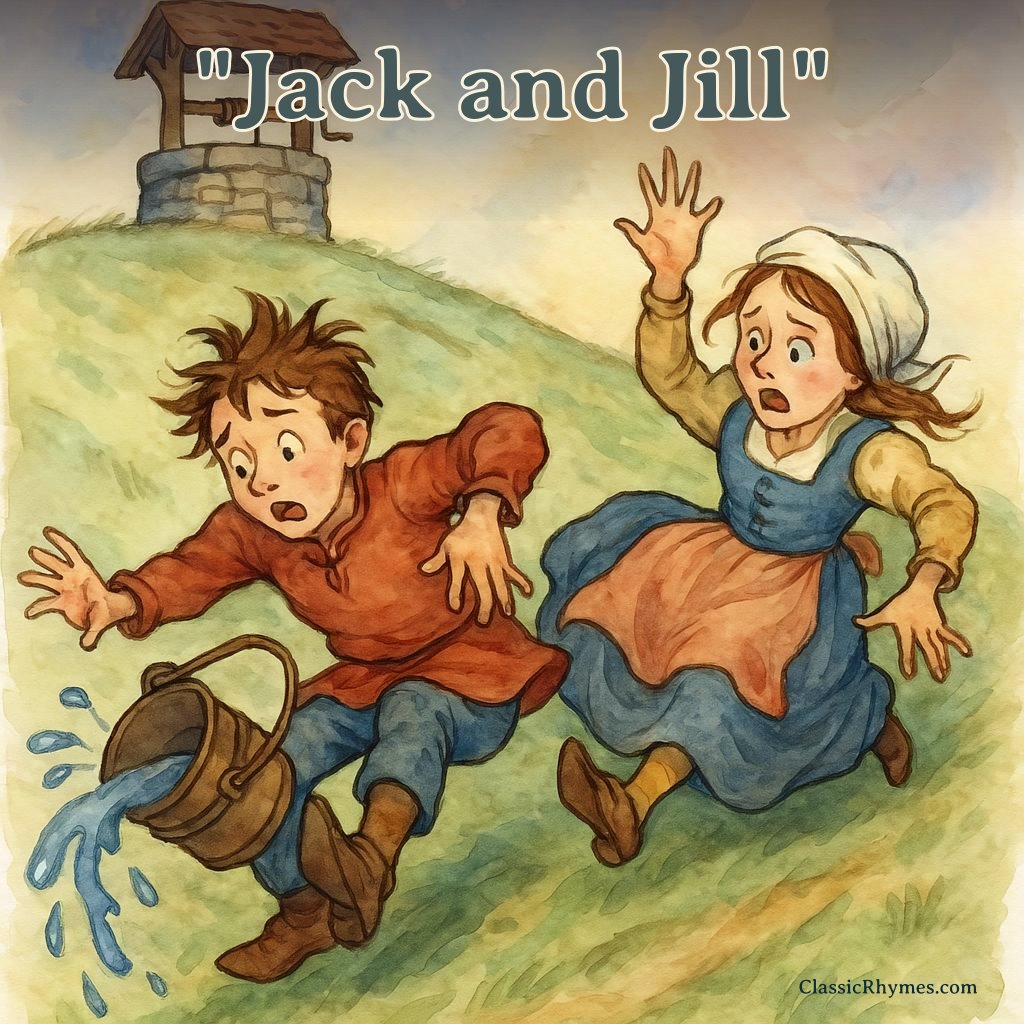
Jack and Jill
This classic English nursery rhyme narrates the tale of two siblings or friends who ascend a hill to fetch water and suffer injury upon falling. It is one of the oldest and most popular rhyming couplets in the English language.
Jack and Jill went up the hill, to fetch a pail of water.
Jack fell down and broke his crown, and Jill came tumbling after.
Up Jack got and home did trot, as fast as he could caper.
Went to bed and plastered his head, with vinegar and brown paper.
Then Jill came in and she did grin, to see his paper plaster.
Her Mother, vexed, did whip her next, for laughing at Jack’s disaster.
Print or Save This Rhyme
Download PDFRecitals
Listen as male British:
Listen as female American:
Listen as told in short story format:
What is the Meaning of the ‘Jack and Jill’ Nursery Rhyme?
The rhyme tells of two characters, Jack and Jill, who go up a hill to fetch water; Jack falls and injures his head, and Jill falls as well. The most common reading is that it is simply a playful story or cautionary tale about accidents and looking after each other. However, the rhyme’s meanings and possible symbolism have been debated for centuries—with interpretations ranging from literal accident, to failed tasks, to historic tax protests, and even cosmic myths.
History and Origin of the Rhyme
The rhyme first appeared in print as “Jack and Gill” in John Newbery’s Mother Goose’s Melody (c. 1765) with earlier oral roots and generic “Jack and Jill” names for boy-girl pairs in English since the 16th century. Jack and Gill originally referred to two boys; the second was later feminized to “Jill.” Some believe the rhyme references King Charles I’s reduction of the volume of “jacks” and “gills” (liquid measures) to increase taxes, meaning Jack “lost his crown” and Gill “came tumbling after.” Others think it refers to the Norse story of Hjuki and Bil or to tragic local folklore.
Time Period
The rhyme dates back in print to at least 1765 and was part of the oral tradition even earlier. Its variants and further verses grew in the 19th and 20th centuries.
Historical or Cultural Notes
Many towns—such as Kilmersdon in Somerset—claim to be the site that inspired the rhyme, often citing local legends. The story of Hjuki and Bil in Norse mythology, who were taken by the moon while fetching water, may have influenced the rhyme. The British tax reform theory ties the rhyme to historical changes in liquor measurement.
Why It Became Popular
Its memorable rhythm and storyline, as well as its easy fit for illustration and dramatization, have kept it widely recited by children for generations. Familiar, universal characters and a catchy, repetitive verse make it an enduring part of English-speaking childhoods.
Notable Variants
Later verses exist showing Jack and Jill returning home, being cared for, or suffering more mishaps. Some regional versions modify the story or add new adventures.
First Known Publication
First published in Mother Goose’s Melody (London, c. 1765).
Structure, Style, and Themes
Structure and Style
- Meter: Iambic, with a ballad-like sing-song
- Rhyme Scheme: AABB
- Line Count: Four per verse, many variants have more
- Style Notes: Simple storytelling and gentle humor; can be extended with extra verses
Themes
- Accidents and consequences
- Play and exploration
- Friendship or sibling bond
- Endurance and recovery
- Possibly: historical protest, myth, or local legend
Language Notes
“Broke his crown” means suffered a head injury. “Jill” is pronounced to rhyme with “hill” and was once “Gill.” “Vinegar and brown paper” was a common folk medicine remedy for bruises and sprains.
Moral or Lesson
Often taken as a warning to be careful, or a story of supporting friends or siblings in hardship. Some view it as an allegory for the inevitability of mishaps and the importance of perseverance.