
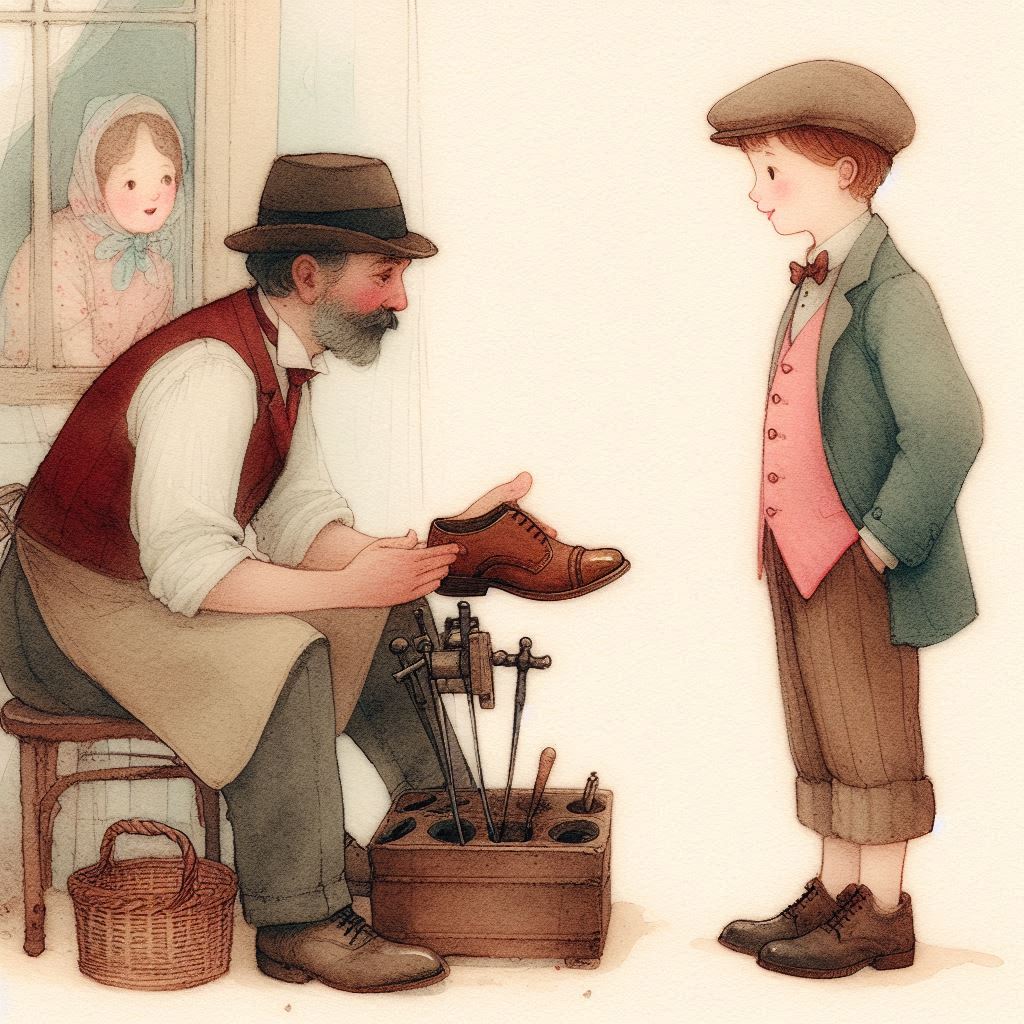
Cobbler Cobbler Mend My Shoe
This rhyme is a short, functional English nursery verse centered on a simple occupational task. It is often taught to children to help them learn about different trades and the concept of simple repair and payment for essential services.
Cobbler, cobbler, mend my shoe.
Get it done by half past two.
Half past two is much too late!
Get it done by half past eight.
Stitch it up and stitch it down,
And I’ll give you half a crown.
Print or Save This Rhyme
Download PDFRecitals
Listen in male British voice:
Listen in female American voice:
What is the Meaning of the ‘Cobbler Cobbler Mend My Shoe’ Nursery Rhyme?
This nursery rhyme is a direct and playful request made to a cobbler, asking for a shoe to be mended by a specific time. It introduces children to the concept of traditional trades — in this case, shoemaking and repair — while incorporating rhythm and repetition. The rhyme often functions as a chant or a game, sometimes involving foot tapping or miming shoe repair.
History and Origin of the Rhyme
The rhyme is of British origin, reflecting everyday life in the pre-industrial and early industrial eras, when cobblers were common in every town and children were familiar with going to them for repairs. It showcases how many nursery rhymes were drawn from the domestic and social routines of the time.
Time Period
The rhyme likely originated in the late 18th or early 19th century. It appears in many 19th-century collections of nursery rhymes and continued into the 20th century through oral tradition and early childhood education.
Historical or Cultural Notes
The rhyme preserves a snapshot of a time when small shoe‑repair shops and street cobblers were part of daily life, before mass‑produced shoes and “throwaway” habits became common. Its reference to obsolete currency and a disappearing trade is one reason it appears in historical or heritage‑focused collections as well as modern nursery books.
Why It Became Popular
Its popularity comes from its catchy rhythm, everyday subject matter, and its use in action-based play. It’s often recited with foot-stomping, clapping, or pretend shoe-repair gestures, making it ideal for nursery settings. It also helped introduce children to ideas of time, tradespeople, and the concept of asking politely.
Notable Variants
Some versions add lines about polishing or buckling the shoes, or end with the wearer walking “round the town” in the mended pair. Other editions alter the times given (“quarter to two,” “nine o’clock”) while keeping the same underlying pattern of asking for quicker service and offering a reward.
First Known Publication
The rhyme was included in 19th-century nursery rhyme collections, including those by James Orchard Halliwell and later in educational readers and Mother Goose anthologies.
Structure, Style, and Themes
Structure and Style
- Meter: Regular, bouncy rhythm suited to chanting or clapping games.
- Rhyme Scheme: Tight couplets with repeated end‑sounds in each pair (AABBCC).
- Line Count: Six short lines in the standard modern version.
- Style Notes: Direct address to a worker, with a miniature “problem and solution” narrative.
Themes
- Work, skill, and craftsmanship.
- Time, deadlines, and impatience.
- Payment and the value of labor.
Cultural or Educational Function
This rhyme introduces children to the concept of occupations, money, and timekeeping. It’s also a tool for rhythm, memory, and imaginative play, especially through roleplay and group participation. It may also reflect values like work ethic and the concept of fair exchange (payment for service).
Usage in Modern Times
Still recited in preschools and early education, especially in the UK and Commonwealth countries. It is sometimes adapted into musical or movement games, and remains a staple in classic nursery rhyme collections.
Moral or Lesson
Respect for trades and timely work. The rhyme gently reinforces the value of skilled labor, fairness in payment, and timeliness.