
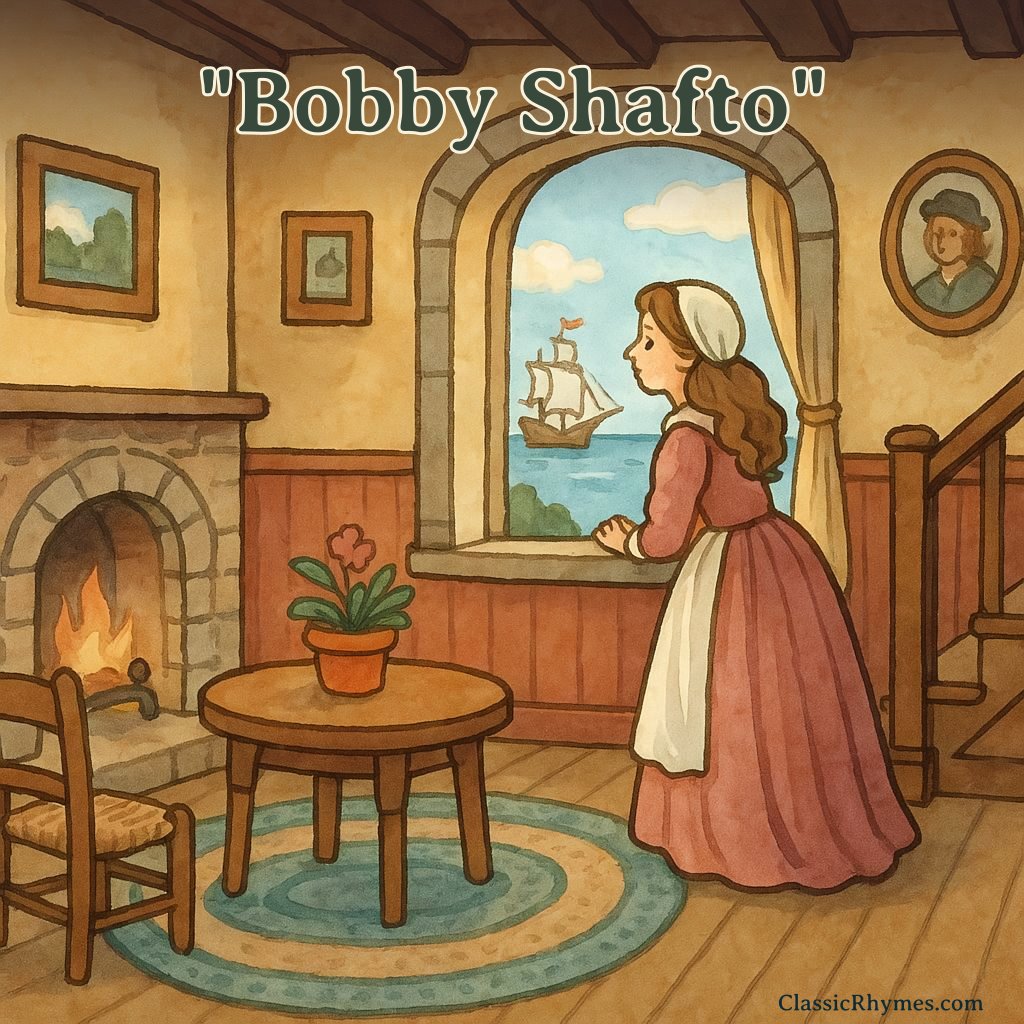
Bobby Shafto
This traditional English song is about a young man, Bobby Shafto, who has gone to sea, leaving a weeping companion behind. The song’s simple, sentimental melody has endured for centuries, though its original inspiration remains debated.
Bobby Shafto’s gone to sea,
Silver buckles at his knee;
He’ll come back and marry me,
Bonny Bobby Shafto!
Bobby Shafto’s bright and fair,
Combing down his yellow hair;
He’s my love for evermore,
Bonny Bobby Shafto!
Print or Save This Rhyme
Download PDFRecitals
Listen as female British:
Listen as female American:
Listen as told in a story:
What is the Meaning of the ‘Bobby Shafto’ Nursery Rhyme?
“Bobby Shafto” is a traditional English folk song and nursery rhyme expressing the longing and admiration of a woman for her beloved Bobby, who has gone to sea. The speaker hopes for his return and eventual marriage. The rhyme conveys themes of love, hope, and steadfastness; it can also be seen as a reflection on the uncertainties of seafaring life and the waiting it imposed on families and sweethearts.
History and Origin of the Rhyme
The song dates back to at least the mid-1700s and is most strongly associated with Robert Shafto, a real 18th-century British Member of Parliament from County Durham. It was popularized as a campaign jingle for Shafto during the 1761 parliamentary election. Local lore connects it to a romance with Bridget Belasyse, though Shafto actually married Anne Duncombe, another heiress. The earliest printed version appeared in 1805, with additional verses and spellings found in 19th-century collections.
Time Period
Established by oral tradition in the 18th century, printed versions from the early 1800s, and it remains in common use as both a children’s song and part of England’s folk music heritage.
Historical or Cultural Notes
The song is tied closely to the North East of England and County Durham’s history. The connection to Robert Shafto’s campaign and the rumors of unfulfilled romance give the rhyme layers of personal and regional meaning. It is preserved in countless anthologies, school curriculums, and local heritage events.
Why It Became Popular
Its catchy melody and refrain, connection to real historical figures, and romantic storyline contributed to lasting popularity. The song’s use in political campaigning and its memorable narrative made it a part of both local folklore and national nursery rhyme repertoires.
Notable Variants
Earlier and regional versions add lines about Bobby’s appearance and his admirers. Some versions alter the refrain or use “Pretty Bobby Shaftoe”. An 1812 version mentions “Bobby Shafto’s getten a bairn, for to dangle on his arm”.
Structure, Style, and Themes
Structure and Style
- Meter: Rhythmic, sing-song stanza
- Rhyme Scheme: AABC DDBC (most common version)
- Line Count: Eight lines (standard); additional verses in some versions
- Style Notes: Ballad-like, romantic, repetitive
Themes
- Longing and hope
- Love and fidelity
- Uncertainty and adventure
Language Notes
The rhyme uses affectionate diminutives (“Bobby,” “Bonny”), descriptive imagery (“silver buckles,” “yellow hair”), and repetition for emotional emphasis. Versions differ slightly in language and spelling, reflecting oral transmission.
Moral or Lesson
Highlights constancy in love, hope, and the waiting often experienced by those with loved ones at sea.