
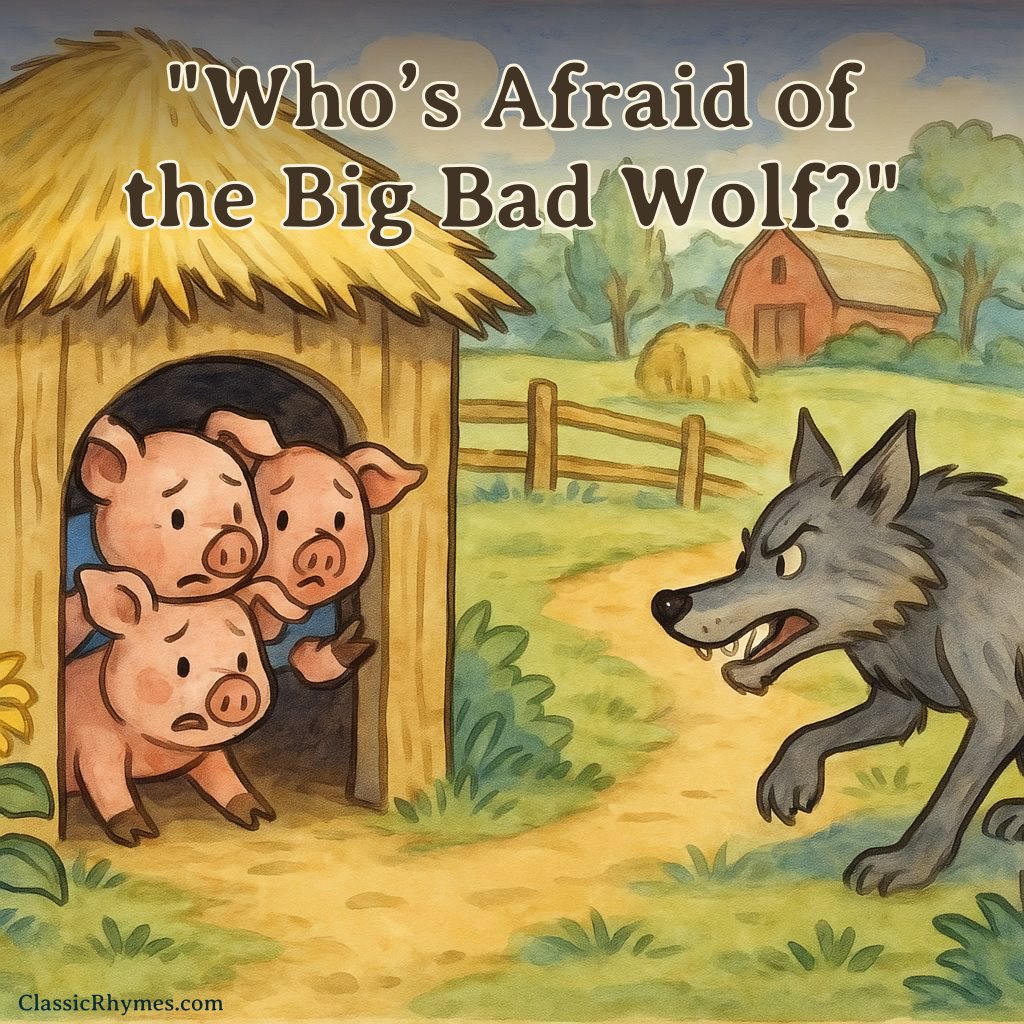
Who’s Afraid of the Big Bad Wolf?
This song is an iconic piece of American popular music originally written for the 1933 Walt Disney animated short The Three Little Pigs. The song served as an anthem of resilience and optimism during the Great Depression, encouraging listeners not to fear difficult times.
Who’s afraid of the big bad wolf?
The big bad wolf, the big bad wolf
Who’s afraid of the big bad wolf?
Tra-la-la-la-la-la!
I’m not afraid of the big bad wolf
The big bad wolf, the big bad wolf
I’m not afraid of the big bad wolf
Tra-la-la-la-la-la!
Print or Save This Rhyme
Download PDFRecitals
Listen as female American:
Listen as male American:
Listen as told in a story:
What is the Meaning of the ‘Big Bad Wolf’ Nursery Rhyme?
“Who’s Afraid of the Big Bad Wolf?” is a cheerful and defiant song from Disney’s 1933 animated cartoon “Three Little Pigs”. Sung by the carefree pigs, the song teases and mocks the story’s villain, the Big Bad Wolf, reflecting the pigs’ (over)confidence that their houses can withstand his attacks. It became a symbol of optimism and resilience, especially during the Great Depression, encouraging listeners to face fears and adversity with a playful spirit.
History and Origin of the Rhyme
Written by Frank Churchill with lyrics by Ann Ronell, the song debuted in Disney’s Three Little Pigs (1933 Silly Symphony short). The film won the Academy Award for Best Animated Short subject and the song rapidly became a pop culture hit, helping establish Disney’s musical formula for future cartoons and features.
Time Period
Premiered in 1933 and immediately became popular throughout the United States and internationally during the 1930s. Its popularity endured in covers and collections for decades.
Historical or Cultural Notes
The song’s enormous popularity in 1933 made it an anthem of hope during hard times. It spawned sequels, recordings, and reuses in Disney’s media, and inspired adaptations and references in American theatre and pop culture. Its roots trace to traditional children’s chase games (“Who’s Afraid of Black Peter?”) and serve as a lasting testament to the wolf’s place in Western folklore.
Why It Became Popular
Its upbeat melody, catchy refrain, and lighthearted defiance captured the public mood during the Great Depression, offering both children and adults comfort and cheer in difficult times. Disney’s widely viewed cartoon and continued references in sequels cemented its legacy.
Notable Variants
Many cover versions exist, including those by Henry Hall, Barbra Streisand, and LL Cool J (1991). Lyrics have been adapted in various languages and for commercials, TV, and stage.
Structure, Style, and Themes
Structure and Style
- Meter: Lively, march-like melody
- Rhyme Scheme: Repetitive with refrain
- Line Count: Usually eight lines per verse/refrain
- Style Notes: Anthemic, playful, dialogue-based
Themes
- Optimism and courage
- Defiance of fear or danger
- Childlike humor and fantasy
Language Notes
Simple, repetitive phrasing suitable for children’s sing-alongs and for building catchy refrains. The phrase “Who’s afraid of the big bad wolf?” has entered English idiom and been adapted into other works, including Edward Albee’s play title “Who’s Afraid of Virginia Woolf?”.
Moral or Lesson
Teaches resilience and not letting fear control one’s life, using humor and confidence as strategies for confronting challenges.